Constanta is a historical coastal town with many spa resorts, beach bars and lively parties and, also it is the largest port on the Black Sea coast. Constanta is my home for more than 19 years, which means I know every single place in here. Constanta Port is one of the main economic players in the region and together with the hospitality industry and the tertiary sector shapes Constanta’s economic environment. Both the city and the Port are well connected to all modes of trasnport: rail, roads, inland waterway, maritime transport and air.
How to reach to Constanta
It is easy to reach Constanta by road from Bucharest and it will take you 2-2.5 hours. If you are driving, you have to take the A2 highway. You can also take the train to the railway station to Constanta which offers connections from the rest of Romania. It is cheaper and more comfortable and if you are a student, you can travel for free.
Things to do in Constanta
1) Go to the Neversea Festival
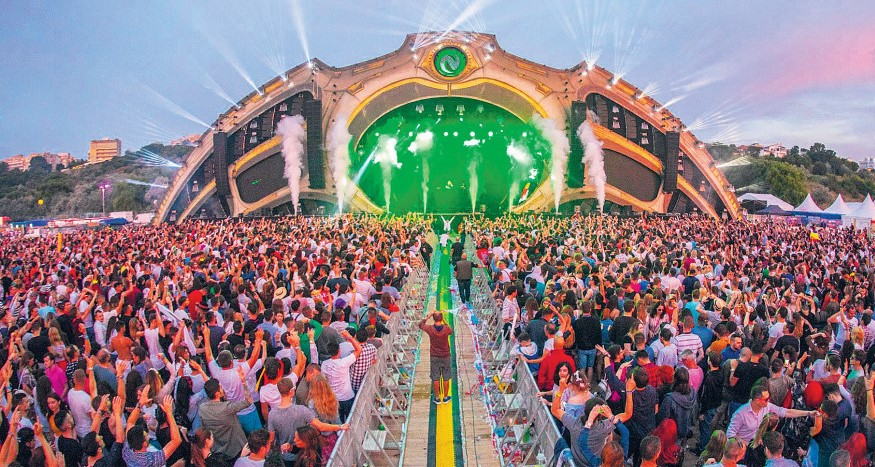
Neversea Festival, held in the scenic coastal city of Constanta is an immersive music festival that spans EDM, electronica, pop and urban sounds. Reaching its fifth edition, Neversea has excelled year-upon-year due to heady stellar lineups similarly to the giant Untold Festival.
The historic city of Constanta, rich in culture and traditional architecture is revitalised with parties aplenty in a multitude of venues that don’t stop before the sun rises. More and more tourists from all over the world come to Neversea, which makes Constanta the most popular destination in Romania.
2) Sunbathe on Mamaia’s Sandy Beaches
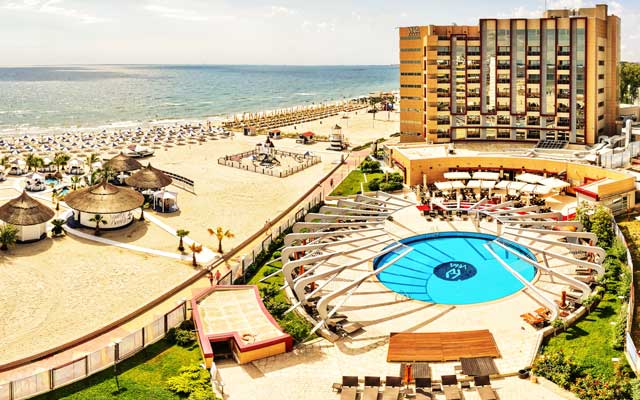
First of all, book a hotel that’s right on the beach like Zenith (4 stars) or head to a beach bar like Tan Tan with fine sand and large beach. There are tens of beach bars and restaurants where you can stroll to for a bit of lunch or to take a break from the heat. Black Sea coast attracts many tourists with children and youth every yea in July and August .
3) Visit Aqua-Magic
.
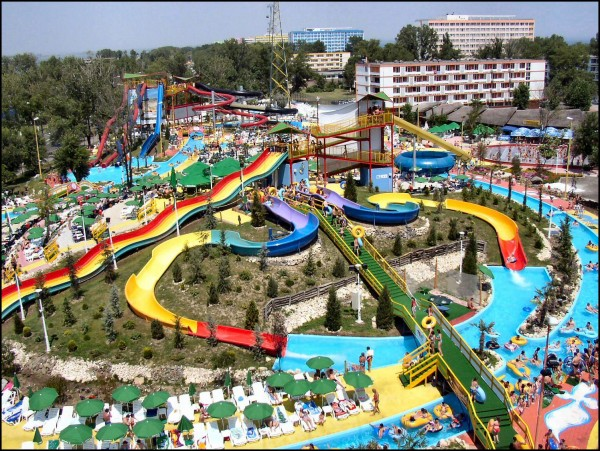
Aqua Magic, Mamaia is a big waterpark with slides, games and play areas for kids, pool bars, restaurants and souvenir shops. Either you are coming with your family or with your friends, Aqua Magic is one of the funniest ways to spend your day, from 9 am to 7 pm.
4) See Constanta’s Abandoned Casino
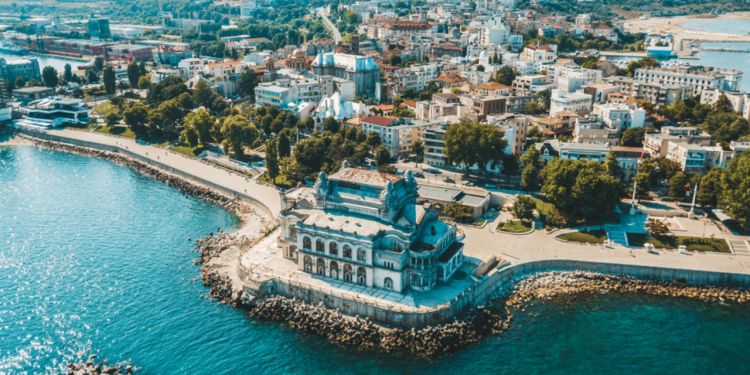
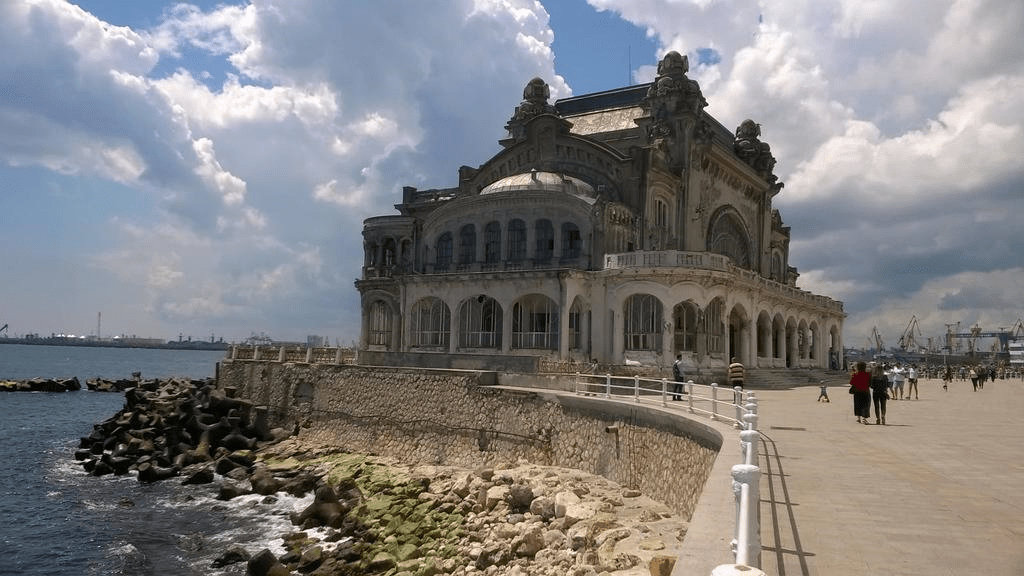
I know this building doesn’t look like a casino, but it was once upon a time. It is on Constanta’s main boardwalk and is a lovely sight. Believe it or not, Constanta Casino has served not just as a casino and a restaurant, but also a temporary wartime hospital. It last served as a „House of Culture”, but it is currently abandoned because of high operational costs.You don’t actually have to go inside, but you can enjoy an evening walk around it and watch the sunset. What excites us is the fact that it was announced the start of rehabilitation works, which means the Casino will continue to attract millions of tourists.
5) Explore Constanta’s Party Scene
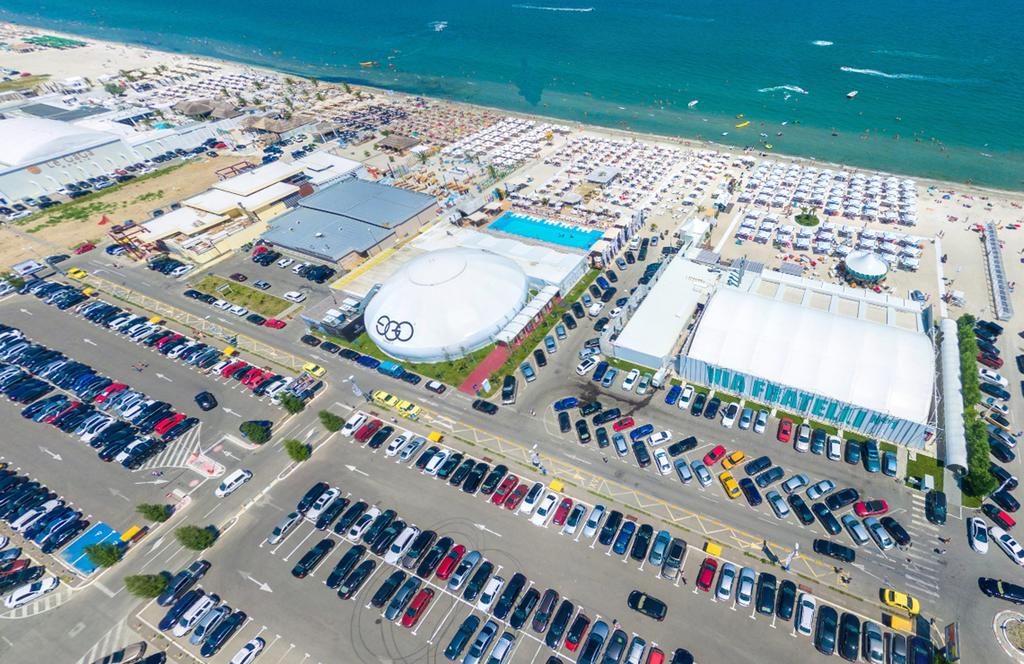
Constanta is a party destination and there are many different kinds of parties that you can find every other night. So, if you are coming with your friends and you want to have a lot of fun i suggest you the Summerland destination, located in Mamaia Nord. There are plenty of clubs for different budgets. If you have a higher budget, you should go to Loft, Nuba (day parties) or Breeze. The music is very good, but the prices are pretty high. If you want a lower-budget night you should go to Crazy beach or Fratelli. Elites from all over the world are coming here every summer to party and spend a lot of money.
I also have the powerpoint version, but the site doesn’t let me load it, i don’t know what happened. I did the presentation 2 times with the same result, i also put animations and transitions with no result…
As of 1878, Constanța was defined as a „poor Turkish fishing village.” As of 1920, it was called „flourishing,” and was known for exporting oil and cereals.
Constanța is one of Romania’s main industrial, commercial and tourist centers. During the first half of 2008, some 3,144 new companies were established in Constanța and its neighbouring localities, a number surpassed only in Bucharest and Cluj County. The Port of Constanța is the largest on the Black Sea and the fourth largest in Europe. The city also boasts a comparably large shipyard.
Port of Constanta
The Municipality of Constanta is the economic and administrative centre [regional capital] of the Romanian county bearing the same name. It is located in the south-eastern part of Romania with the surface of the administrative territory being 12,489 square kilometres. In total, the city has 315,000 inhabitants and the whole metropolitan area has half a million inhabitants. The Eastern side of the municipality is limited by the Black Sea and the Danube flows approximately 50 km away from the Western edge of the city. Constanta, the old Greek citadel Tomis, has an impressive history. 2500 years of existence and 2250 years of documented attestation were celebrated in 1991. It has acted as a crossroad for civilization. Constanta has always represented an important connection between the East and the West.
Social challenges
As a social challenge Constanta defines the negative ratio between the active and inactive population. One of the reasons for this situation is that there are many pensioners from the military services who had a chance to go on early retirement and also the port activities allow people to retire earlier than the average employee. In addition, there is a strong migration tendency towards Western Europe and rural areas that led to a decrease in – economically active – population. The insufficient equipment for police and other bodies to maintain public order is another important social challenge.
Economic challenges
A major potential for the development of Constanta is the tourism sector. The possibilities to develop this sector are currently limited as a major part of Constanta’s port is still industrial. It will be given to the city in the near future so that then a large marina can be developed as another major attraction for Constanta as a tourist destination.
A further obstacle towards successful economic development on the peninsula is the very bad physical condition of buildings, road and public space that requires massive investment.
Environmental challenges
The increasing of car traffic, especially in the summer season, is one of the most important environmental challenges in Constanta. The City of Constanta has developed a Masterplan for the peninsula that foresees the creation of a pedestrian zone on most parts of the area, but this will certainly not be realised with a short-term perspective. Further relief from traffic congestion is to be achieved with the construction of a new ringroad and with the planned coastal road from the Mamaia beach resort to the future marina of Constanta.
Physical challenges
The bad physical state of archaeological monuments and architecturally and historically important buildings describes the main physical challenges of the city. In addition, the urban infrastructure has severe deficiencies in the peripheral areas [lack of sewage, water and heating networks, lack of adequate access ways]. And the city is also confronted with the problem of obsolete homes – low standard housing with a severe lack of maintenance. Important challenges are furthermore the insufficient availability of affordable housing for groups with special needs [Roma, young people, persons with low income and families with many children].
Governance
There is a clear lack of civil society involvement at socio-political life of the city. Even though there is a slight tendency for people to get more involved, the history of the former regime stilll shows its consequences with a reluctance of citizens to get involved in public life and participation processes. By law, the city is obliged to organise public debates for certain activities and topics. The experience in Constanta with such legally binding participation procedures shows that the people’s participation is depending on the topics. In most cases, citizens are only prepared to participate in cases when there is a risk that something is taken away from them.
Tourism
Situated at the crossroads of several commercial routes, Constanța lies on the western coast of the Black Sea, 185 miles (298 km) from the Bosphorus Strait. An ancient metropolis and Romania’s largest sea port, Constanța traces its history some 2,500 years.
One of the largest cities in Romania, Constanța is now an important cultural and economic center, worth exploring for its archaeological treasures and the atmosphere of the old town center. Its historical monuments, ancient ruins, grand Casino, museums and shops, and proximity to beach resorts make it the focal point of Black Sea coast tourism. Open-air restaurants, nightclubs and cabarets offer a wide variety of entertainment. Regional attractions include traditional villages, vineyards, ancient monuments and the Danube Delta, the best preserved delta in Europe.
The National History and Archaeology Museum is located in the old City Hall and has a very large collection of ancient art.
The Thinker and The Sitting Woman; by Hamangia culture from Romania; circa 5000 BCE; terracotta; height of the man: 11.5 cm, height of the woman: 11.4 cm
Tourism has been an increasingly important economic activity in recent years. Although Constanța has been promoted as a seaside resort since the time of Carol I, the development of naval industry had a detrimental effect on the city’s beaches.Nevertheless, due to its proximity to other major tourist destinations, Constanța receives a significant number of visitors every year, who discover and visit the city’s monuments and attractions. Also, Constanța is a centre of commerce and education, both of which significantly contribute to the local economy.
TRANSPORT
The opening, in 1895, of the railway to Bucharest which crosses the Danube River at the bridge at Cernavoda, brought Constanța considerable transit trade in grain and petroleum, which are largely exported; coal and coke head the list of imports, followed by machinery, iron goods, and cotton and woollen fabrics.
The A2 motorway provides a rapid road link between Constanța and Bucharest, while the A4 motorway acts as the city’s outer traffic ring, diverting heavy traffic to and from the Port of Constanta and to Mangalia.
The Port of Constanța includes the North Port and the South Port, and is the fourth largest in Europe. It is protected by breakwaters with a lighthouse at the entrance. The port is sheltered from the northerly winds, but southerly winds can prove highly dangerous at times. The Black Sea squadron of the Romanian fleet is stationed here. A large canal (the Danube-Black Sea canal) connects the Danube River to the Black Sea at Constanța.
The city is served by Mihail Kogalniceanu International Airport.
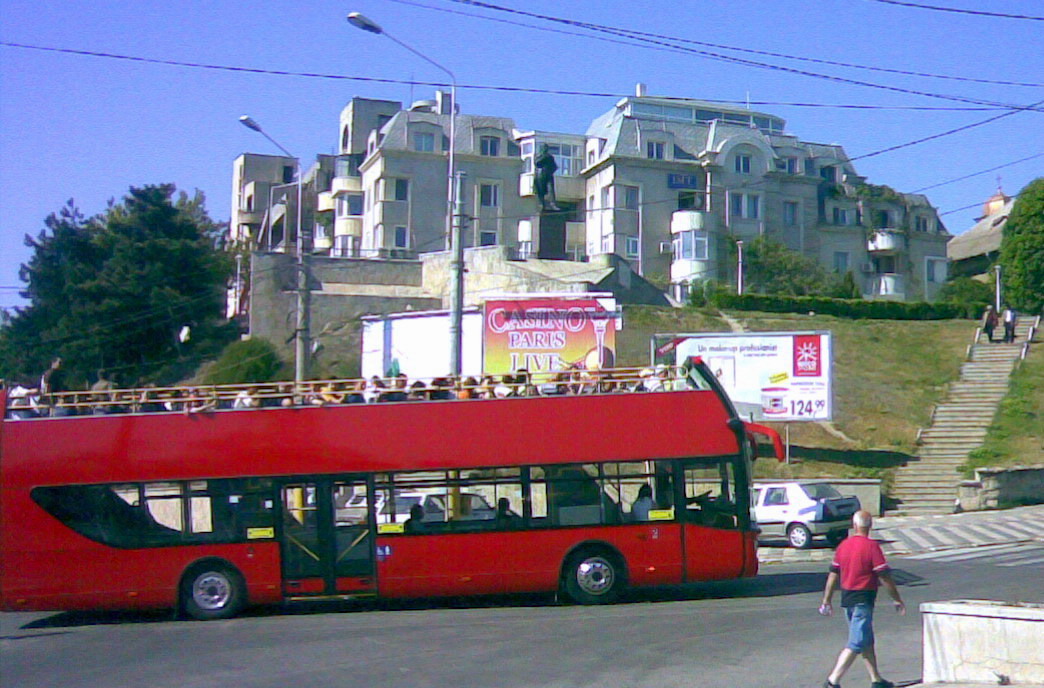
Constanța’s public transport system is run by Regia Autonomă de Transport în Comun Constanța (RATC), and consists of 23 year-round bus lines, and one summer sightseeing double decker open top bus line to tourists.
The entire fleet is now made up of buses from the 2000-2008 period, which are painted in distinctive bright colors, such as pink, yellow and green. There is also a fleet of double decker Volvo buses that run in the summer, providing access to and from the resort of Mamaia. As of October 2013, the cost of a return ticket is 3 lei.
Trams were active until the early 2000s. By this time, however, the cars were almost 25 years old and with the difficulties in maintenance, were decommissioned in favour of long-wheelbase buses. Two trolley buss lines were active until the late 2000s – now also decommissioned and replaced by buses.
In July 2018 Constanța municipality signed an €18 million-contract to acquire new buses manufactured by a Turkish company.
There are also plenty of private minibuses (similar to a share taxi) which run along longer and more intricate lines. The price of a minibus ticket, as of October 2013, varies between 1 and 2 lei depending on the operator.
Politics
The Constanța Municipal Council is made up of 27 councilors and The current mayor of Constanța is Decebal Făgădău (Social Democratic Party).


 Lorena's Travel Encyclopedia